
The Venetian Scene by Michael Levey
You will have gathered by now that I like art historians who are accessible; who want to communicate to a general audience and not just to other art historians. One such is Michael Levey (1927-2008), who taught himself art history, joined the National Gallery in London as a young man, and worked his way up to becoming Director in 1973, a post he held until 1986.
His father was Irish, the mother British, and like so many of his generation, he joined the army, rising to the rank of Captain. He was responsible for instituting a Department of Education at the National Gallery, London, which perhaps explains why he wrote a number of pamphlets in the gallery’s series Themes and Painters in the National Gallery, including the first one on The Nude.
These pamphlets, usually between thirty and fifty pages, illustrated in black-and-white but with a colour cover, were all written by gallery staff. There are twenty of them that I know of, though there may be more. They are uniformly excellent, devoid of jargon, and whether you are interested in Renaissance Portraits, Dutch Townscape, or Mantegna and Giovanni Bellini, they are excellent starting points.
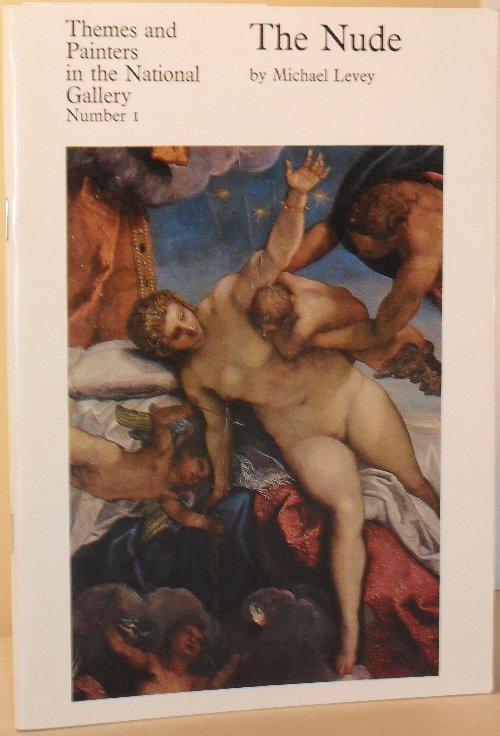
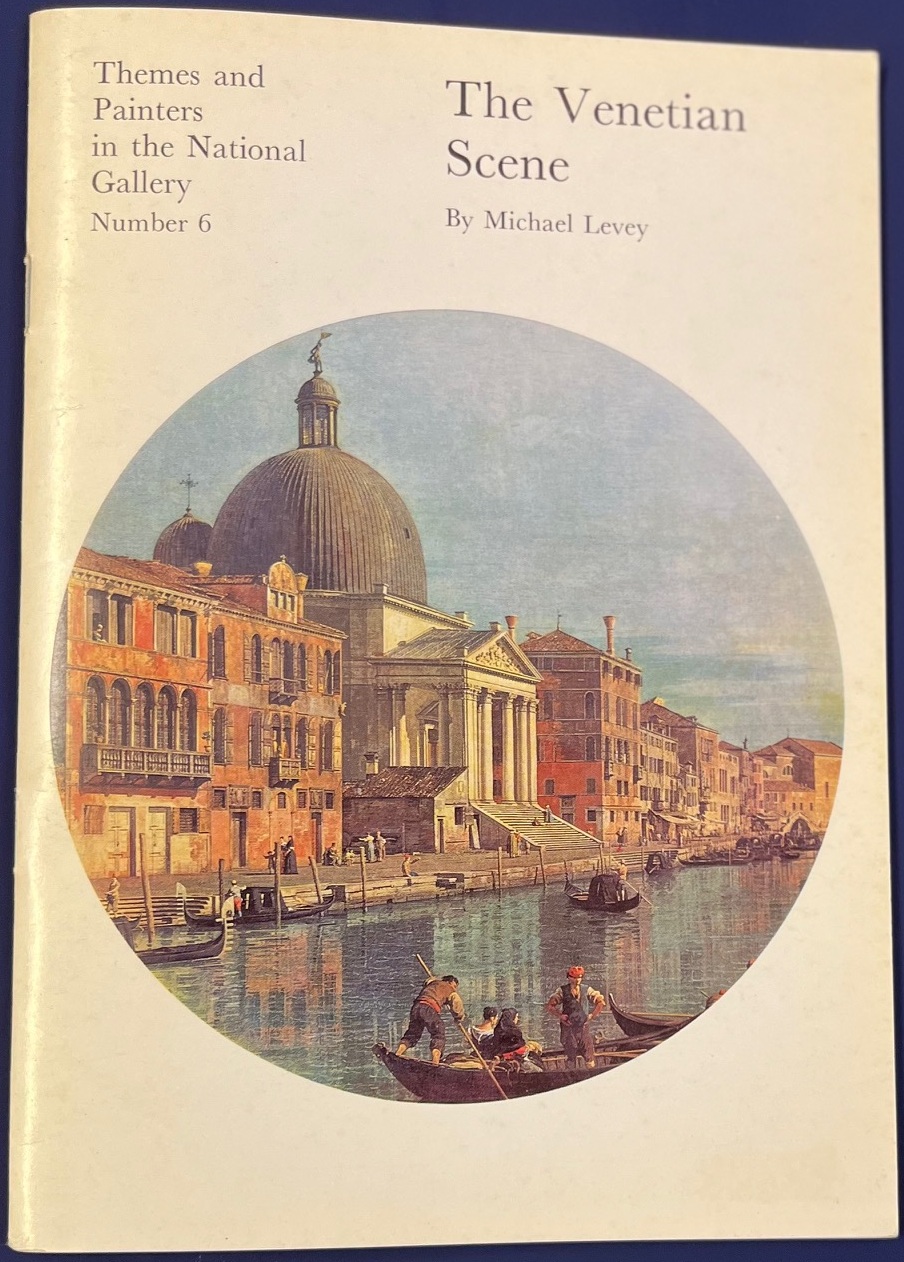

(l-r) cover images of two pamphlets by Levey; photo of Sir Michael Levey
Levey, perhaps helped by the fact that his wife was the novelist Brigid Brophy, had an excellent prose style, straightforward but capable of poetic resonance. In the pamphlet at hand The Venetian Scene, which is primarily (but by no means entirely) about eighteenth-century Venetian painting – think Canaletto and Guardi – he provides us with what is essentially a distillation of his earlier, 1959 book Painting in Eighteenth-Century Venice. He sketches in the early background of what came to be called View Painting, looking in particular at a townscape seen from a high window in a fifteenth century painting by the Flemish painter Robert Campin. In just two marvellous paragraphs (see p.10) on a passage of painting just four inches high, he leads us into the painter’s world and guides our eyes into the intricacies of the painting.
When he gets to Canaletto and Guardi, he tellingly notes that how a painter sees can scarcely be separated from what he sees. These two painters provide us, as he phrases it, with a ‘double vision’ of Venice. With Canaletto, ‘every minute stroke of paint provides us with fresh factual data: shutter- bolt, flaking plaster, roof tiles, ripple of wave and trailing rope’ whereas with Guardi, Canaletto’s minutiae ‘melted away in one rush of air and water…you do not see each brick and tile, or even the marble and the stone’
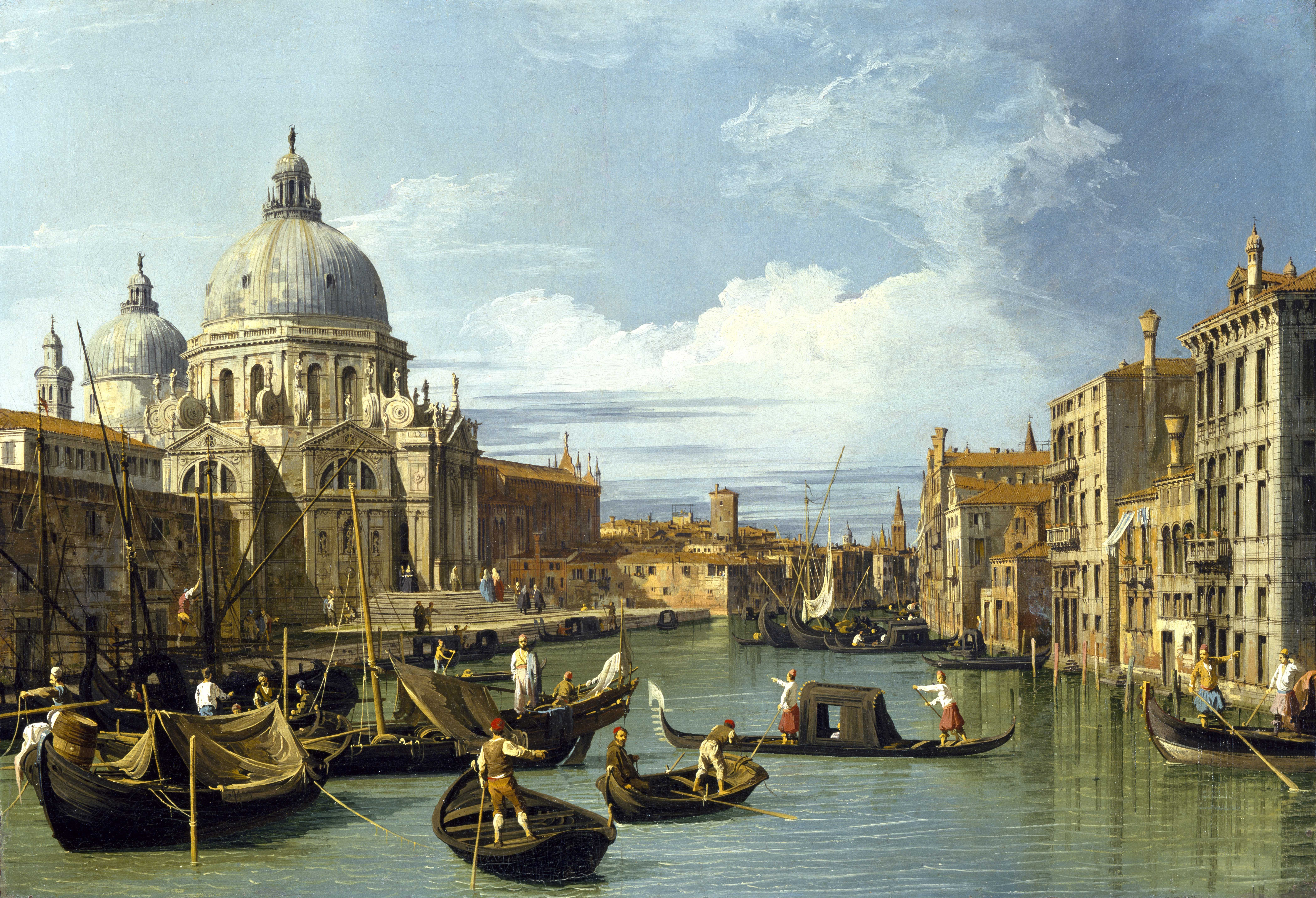
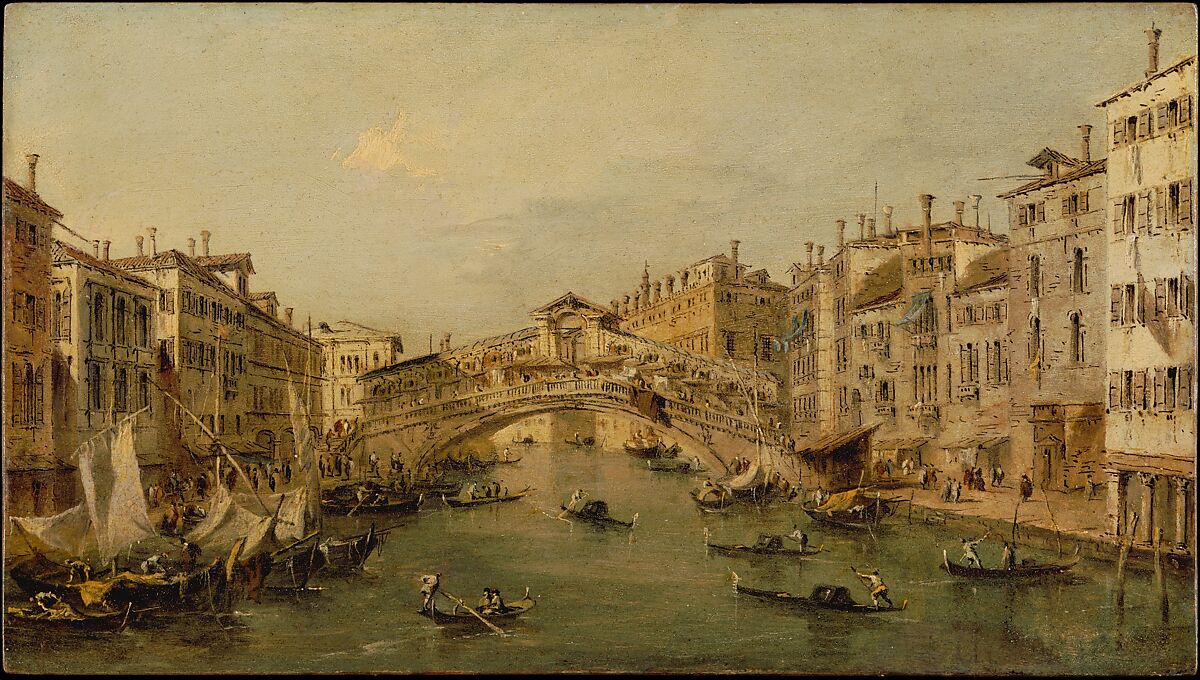
(l-r) 'The Entrance to the Grand Canal, Venice', (c. 1730) by Canaletto; cover of A Concise History of Painting by Levey; 'Venice The Rialto' (late 1760s) by Guardi
Primarily, Levey is interested in subject matter, and in the formal aspects of art. He pays little attention to socio-political aspects and, on occasion, has been criticized for this. However, to judge a writer on the basis of something that he or she did not set out to do is not sensible. Surely we should look at what a writer does and evaluate that!
Whatever Levey writes about – and in this series there are pamphlets by him on Botticelli and Ruisdael – he does so urbanely, straightforwardly, and insightfully. Of his more than seventy books, look at his short, one volume From Giotto to Cezanne: A Concise History of Painting (1962), one of the first histories of art that I ever read, and at his two volumes Early Renaissance (1967) and High Renaissance (1975) both for Penguin.
Brian McAvera, November 2025
A copy of ‘The Venetian Scene’ is available in the NI Visual Art Research Library & Archive at the Golden Thread Gallery. NIVARLA items in the rare and special collection will be available to view by appointment. We will share more information on how to access and use NIVARLA soon!
The Northern Ireland Visual Art Research Library & Archive is supported by the Ampersand Foundation, with many books and archive items donated and on loan from the McAvera & Walker Library.
Golden Thread Gallery is supported by:


Help fund our work
Through a one-off or repeat donation, you’ll enable us to continue showcasing art and culture with our community.
Supported by