The Irish Imagination 1959-71: A satellite exhibition to ROSC 1971
ROSC was a series of contemporary art exhibitions which took place, roughly every four years from 1967 to 1988. They were hugely influential, and hugely controversial, largely because they catapulted contemporary, international, Modernist art into a country that was largely conservative, clergy-dominated, and traditional.
The impact of ROSC was two-fold. Firstly, it tossed a modernist grenade into the Royal Hibernian Academy and likeminded conservative institutions. Secondly, it tossed another grenade into the sleepy world of Irish art history. Rather pointedly, the first ROSC exhibition had excluded Irish artists altogether.
Uproar! Every magazine and newspaper was deluged with recriminatory letters, articles, editorials, and whatnot. They make entertaining reading today: the sound of old scores being settled, of knives firmly stabbed into backs, of died-in-the-wool traditionalists outraged by the ‘poppycock’ and expressing the sure-a-child-could-do-it response to modern art. History does repeat itself at regular intervals.
But this uproar had a beneficial effect because the more intelligent artists, critics and curators realised that they could exert beneficial pressure on the exhibition organisers with the result that, by the time of the 1971 ROSC, the main event had acquired a whole series of satellite exhibitions, most of which featured Irish art. One of these early satellite exhibitions was The Irish Imagination 1959-1971.
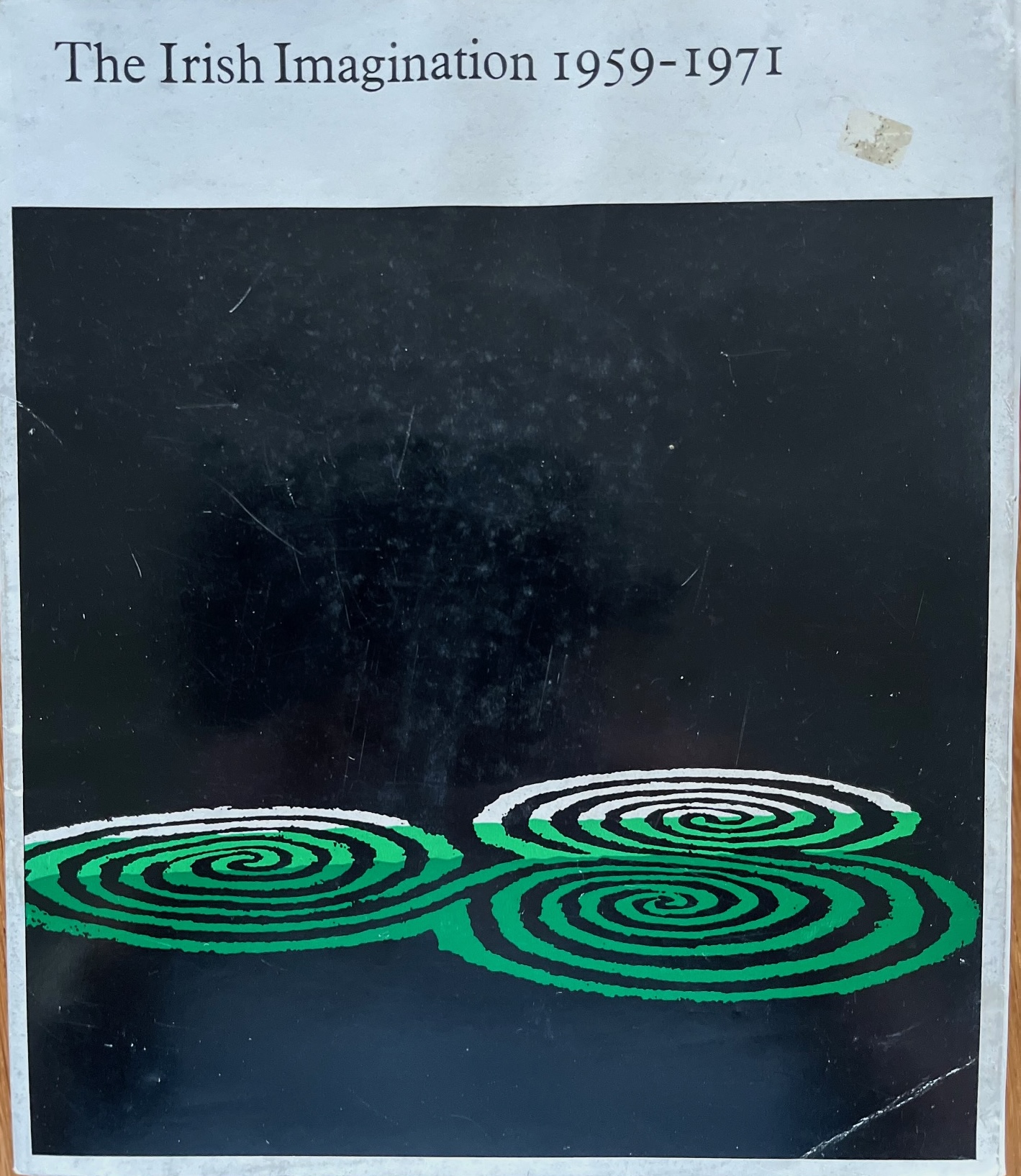
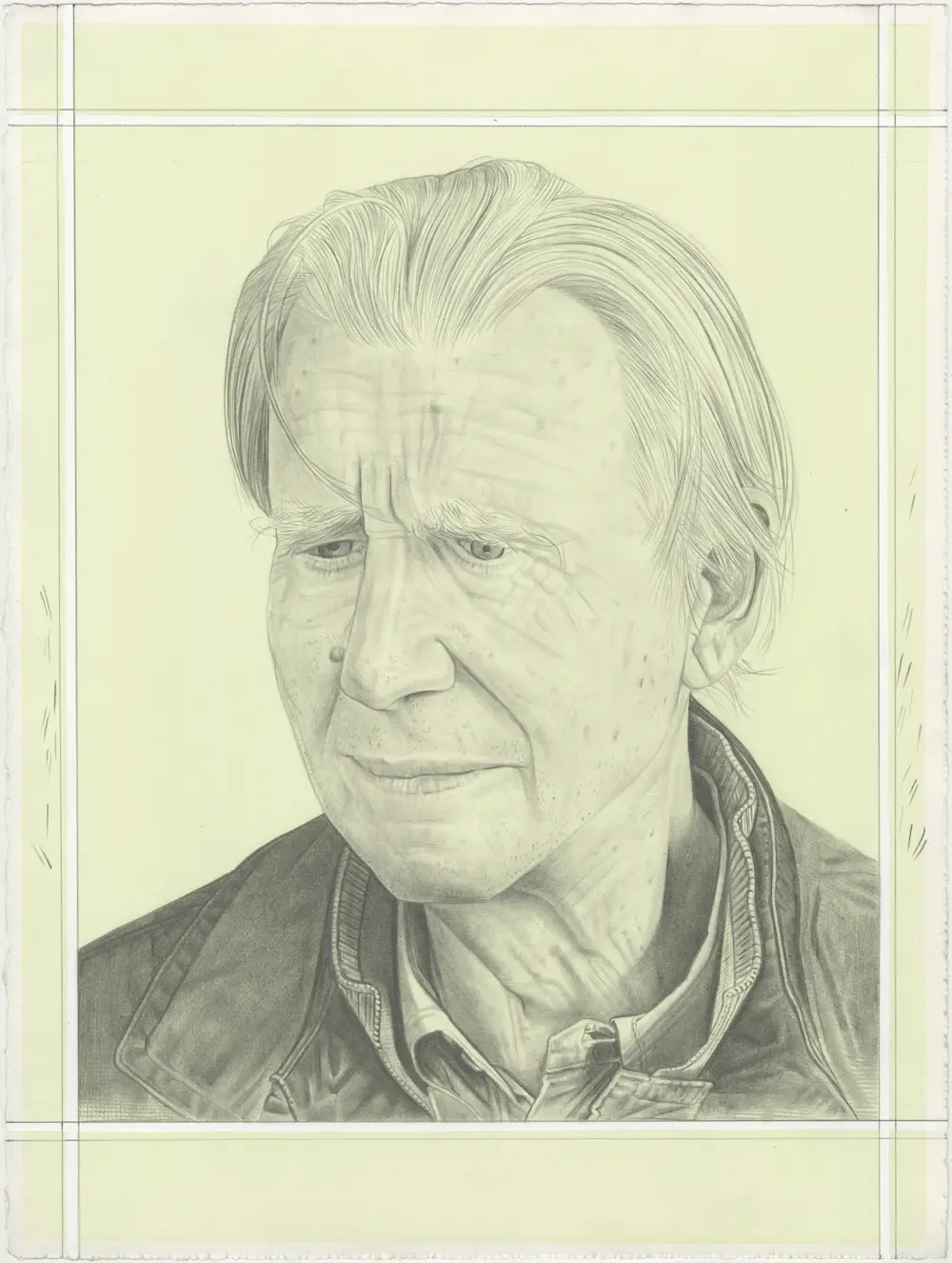
(l-r) front cover of The Irish Imagination 1959-1971; Portrait of Brian O'Doherty by Phong H. Bui, from a portrait by Fionn McCann.
According to Peter Shortt, in his excellent history of the ROSC exhibitions (The Poetry of Vision, Irish Academic Press, 2016) the ‘exhibition was conceived as compensation to Irish artists for their exclusion from the main ROSC 1971 exhibition.’
Originally there were four curators, one of whom was the Irish artist and critic Brian O’Doherty (aka Patrick Ireland) who lived in New York. By the time he had finished O’Doherty was the sole curator and, living in New York, was not exactly in touch with the contemporary pulse of Irish art. Not surprisingly, the artists he chose tended to be the older, well-established artists: presumably, the ones he already knew as opposed to the more radical young Turks. The majority exhibited with The Irish Exhibition of Living Artists (IELA) and only one exhibited with the more radical Independents Group. It also needs to be said that the exhibition consisted largely of paintings: Irish sculpture, and Irish printmaking (Remember the Graphic Studio had been founded in 1960) were only marginally represented.
However, there were positive aspects. Irish artists, including a substantial group of Northern Irish artists, were getting a showing, albeit in a satellite exhibition; and the ROSC exhibitions themselves were slowly creating a climate in which more radical art could exist. In terms of art history, the catalogue to the exhibition did the job properly. In addition to a series of essays by O’Doherty, there were detailed biographies of each of the artists, contributed largely by other Irish art critics and historians, each accompanied by a full-page photograph of a painting. This was the first time, to my knowledge, that Irish artists had been treated to properly detailed biographies and critical assessments in an Irish exhibition catalogue.
Brian McAvera, September 2025
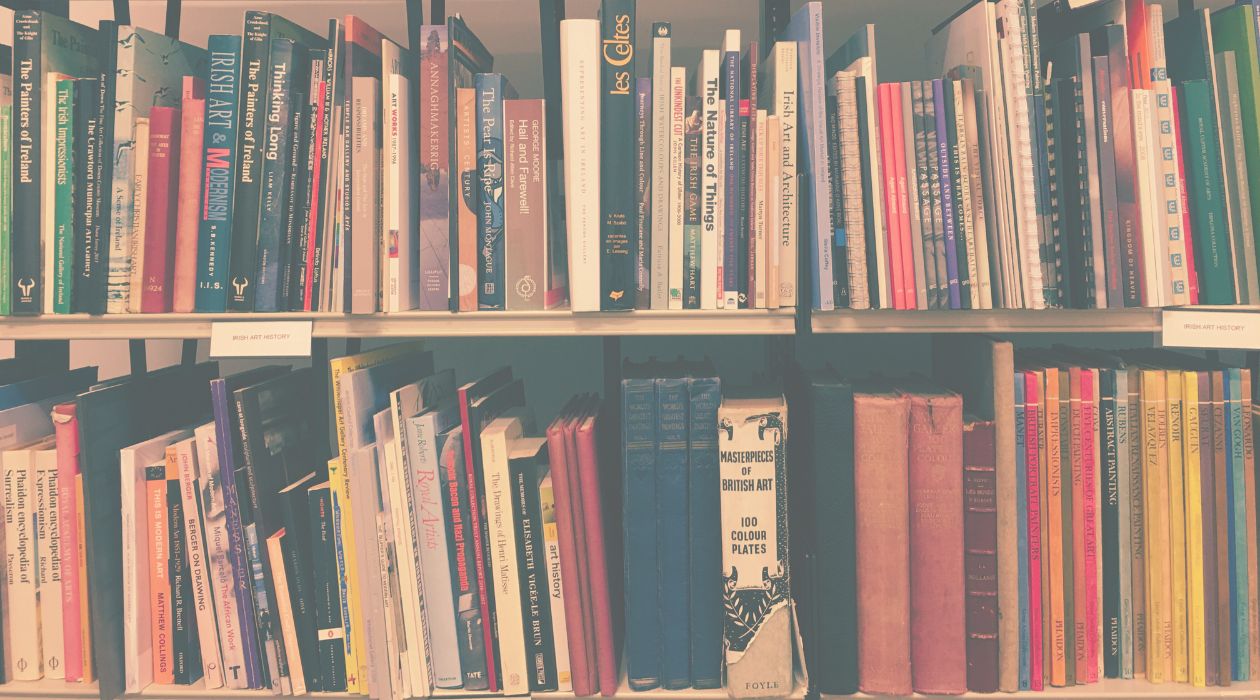
Copies of The Irish Imagination are available in the NI Visual Art Research Library & Archive at the Golden Thread Gallery. NIVARLA items in the rare and special collection will be available to view by appointment. We will share more information on how to access and use NIVARLA soon!
The Northern Ireland Visual Art Research Library & Archive is supported by the Ampersand Foundation, with many books and archive items donated and on loan from the McAvera & Walker Library.
Golden Thread Gallery is supported by: 
Help fund our work
Through a one-off or repeat donation, you’ll enable us to continue showcasing art and culture with our community.
Supported by