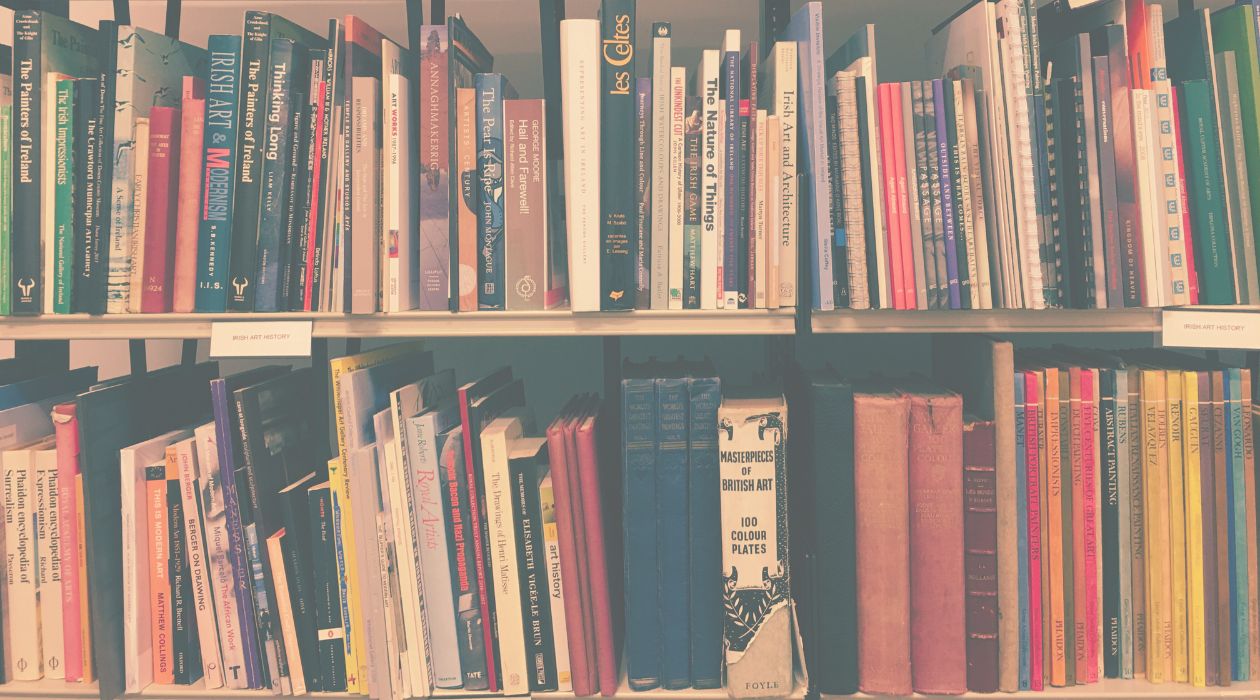
The Allied Irish Bank Collection: Twentieth Century Irish Art, Douglas Hyde Gallery, Dublin, 1986
At the time that this catalogue was produced in 1986, the director of the Douglas Hyde Gallery remarked in his preface that ‘The art of this country in the past eighty years has never been adequately documented or collected’. How times have changed! It is strange to think that it was only in 1980 that the Allied Irish Bank decided that it was going to acquire a representative collection of Irish art, with the emphasis on post 1950 Irish art. To do so it appointed the art historian Dr Frances Ruane. Such was the celerity of her approach – not to mention the amount of money available – that only six years later The Douglas Hyde was able to mount an impressive exhibition of the collection, complete with a folio-sized colour catalogue.
In practice, the historical starting point for the collection was circa 1880, with paintings by artists such as Nathaniel Hone, Walter Osborne, Aloysius O’Kelly, Roderick O’Conor and our own John Lavery, all of whom worked outside of Ireland. In particular, they worked in the context of late nineteenth-century French painting. In her short introduction, Ruane deftly sketches in an outline history of post 1880 Irish art, not being afraid to challenge Irish art history’s provincial attitudes, as when she tartly points out that Walter Osborne, usually classed as an Irish Impressionist, was actually closer to ‘a conservative type of English plein-air painting than to French Impressionism’.
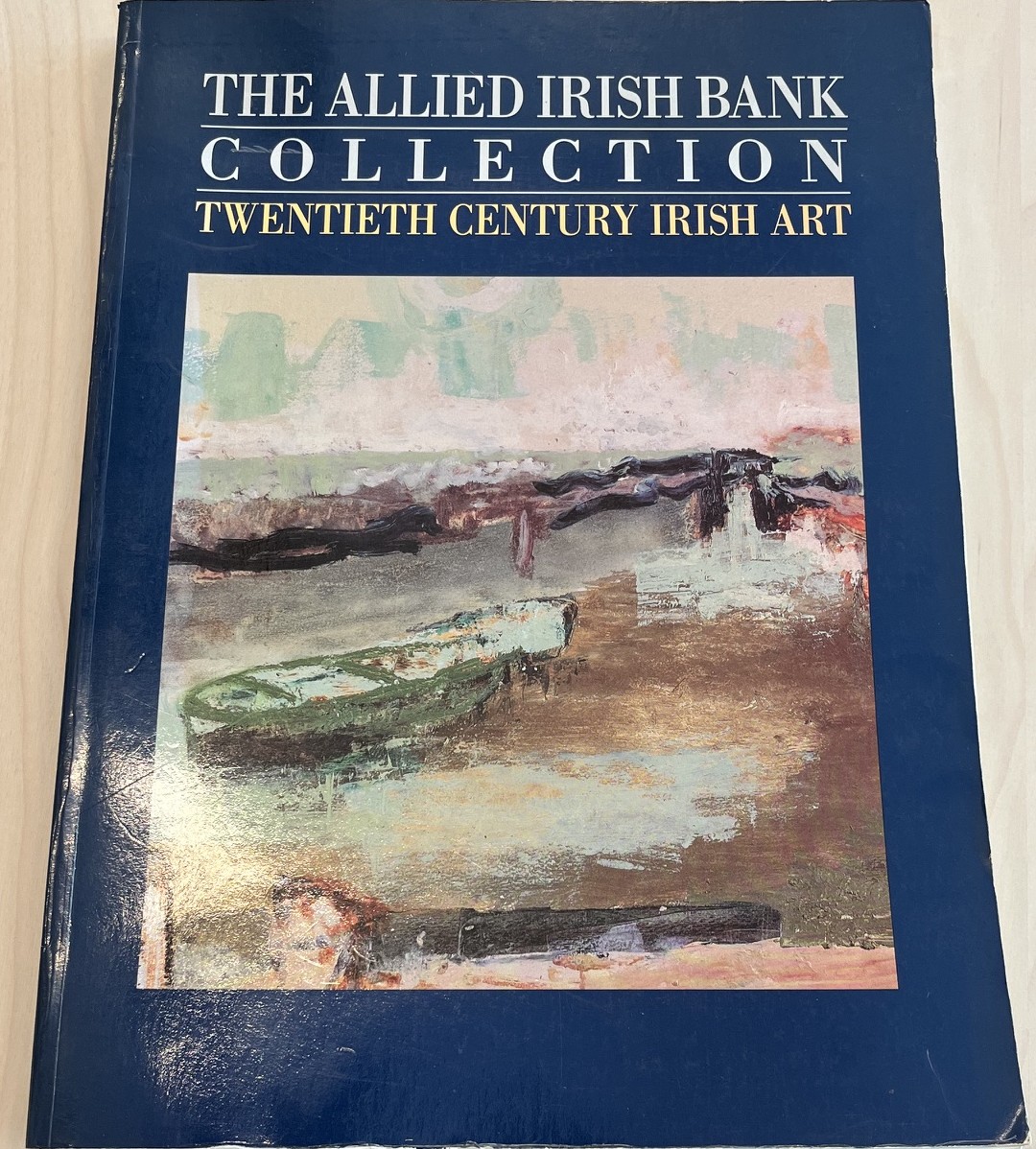
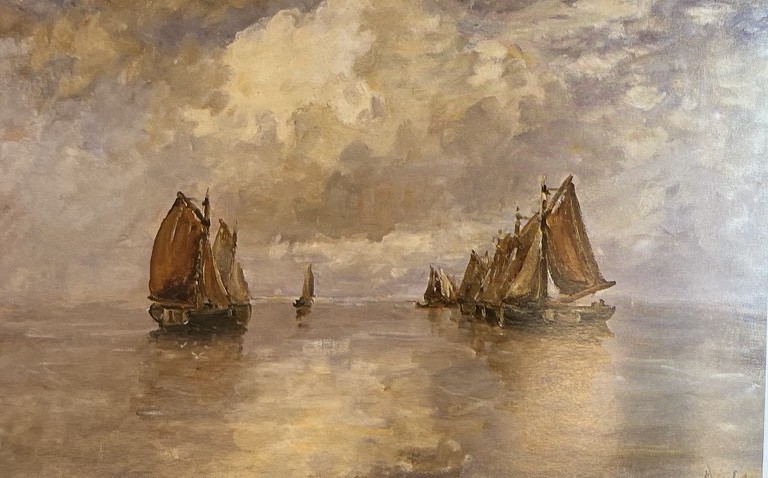
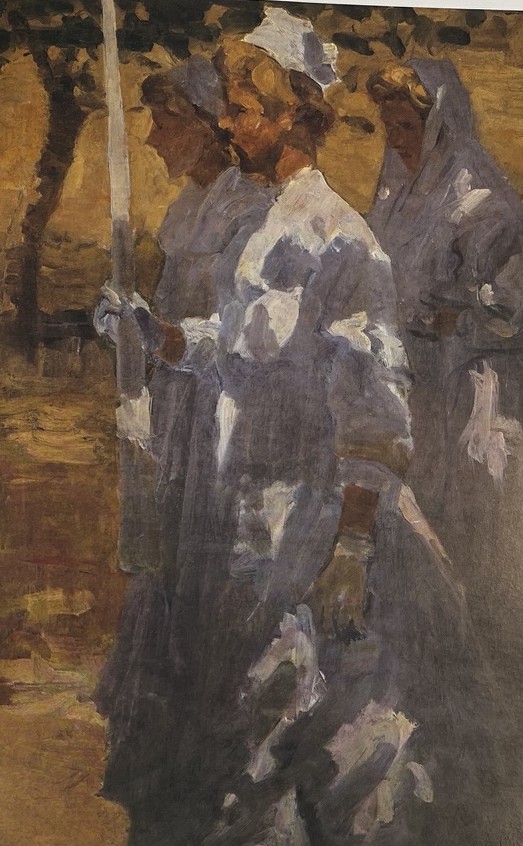
(l-r) front cover of The Allied Irish Bank Collection catalogue; 'Yachts at Sea' by Nathaniel Hone; Corpus Christi Procession by Aloysius O'Kelly
She notes that turn-of-the-century Irish painting was conservative, and that Post-Impressionism had ‘virtually no impact on artists working at home.’ The early decades of the century were dominated by William Orpen, who was largely based in England. When he did occasionally teach in Dublin, he influenced younger artists such as Sean Keating, Margaret Clarke, and Patrick Tuohy. During this period, many artists headed for France (especially Paris) as with William J. Leech, Mary Swanzy, Evie Hone, Mainie Jellett, Jack Hanlon and Norah McGuinness. The return of the first four of these artists introduced Modernism to Ireland.
In 1943 Jellett, Hone and McGuinness founded the highly influential Irish Exhibition of Living Art which gave representation to Irish artists working in European and American non-representational styles. The aforementioned Jack Hanlon also became the director of the Irish Arts Council in Dublin. There were other major painters who worked on the continent but eventually came back to Ireland, including Paul and Grace Henry, Jack B. Yeats and, later, Louis Le Brocquy.
In the 1950s a poetic, semi abstract form of painting emerged in the shape of Patrick Collins, Le Brocquy, Nano Reid, Gerard Dillon, Dan O’Neill, and George Campbell (the last three nicknamed The Belfast Boys), and Tony O’Malley. Come the 1960s, and we saw the emergence of Camille Souter, Barrie Cooke, Sean McSweeney, Anne Madden, most of them loosely rinsed in abstract expressionism, along with T.P. Flanagan, Brian Bourke and Basil Blackshaw who worked in versions of landscape.
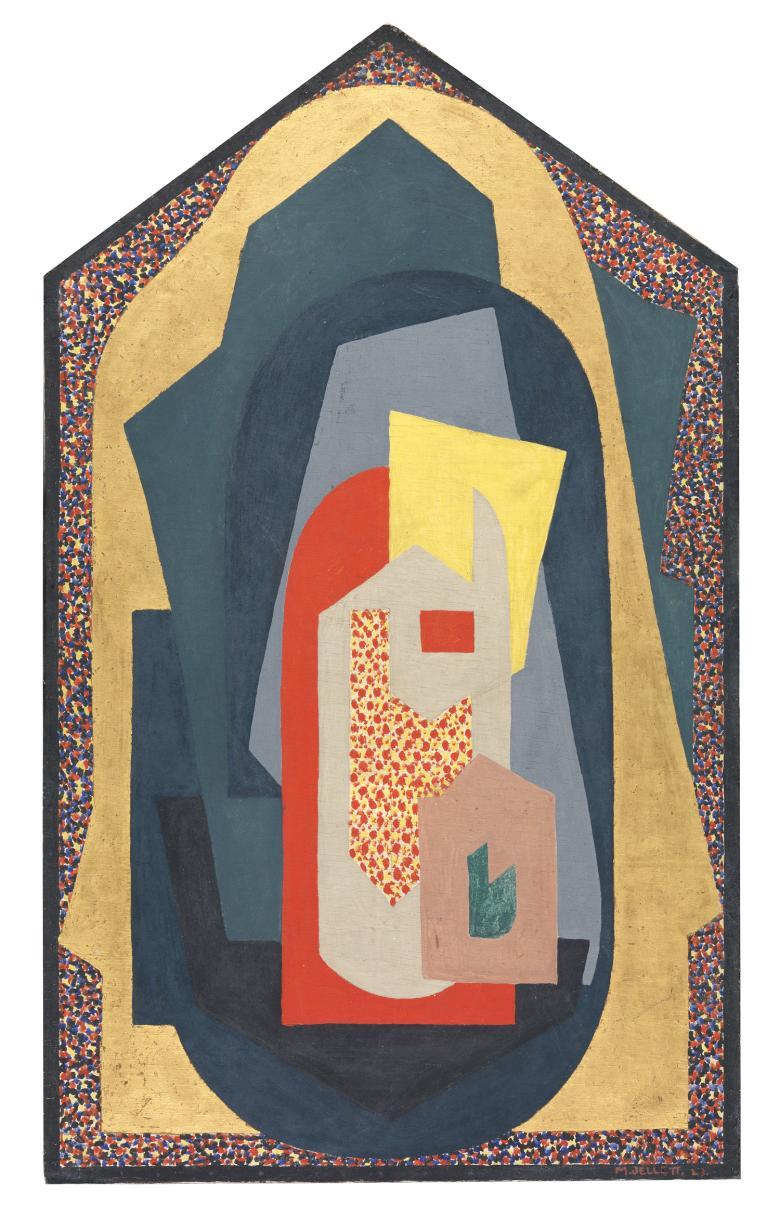
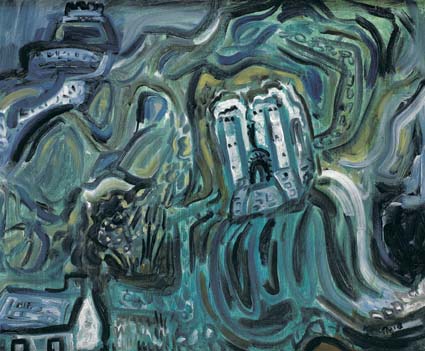
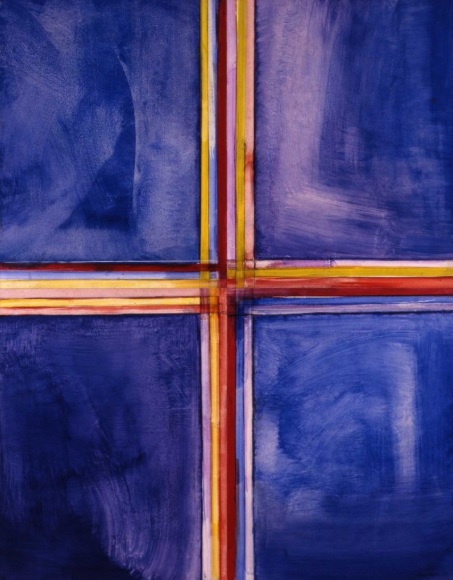
(l-r): Decoration by Mainie Jellett 1923. Photo © National Gallery of Ireland; Old Town Walls by Nano Reid, 1957; Window by Anne Madden 1985, courtesy of IMMA
In terms of sculpture Oisin Kelly, John Behan and Edward Delaney, along with Conor Fallon, came into prominence in the decade along with Gerda Frömel and Alexandra Wejchert, though it should be noted that the most important Irish sculptor, F.E. McWilliam, spent most of his life in England, working in a largely British context. Likewise, the painter Louis Le Brocquy spent most of his career in France.
In the seventies and eighties Irish Sculpture, particularly in the wake of the formation of the highly active Sculpture Society of Ireland (SSI), Irish sculpture bloomed though much of it was international stylings write large. The seventies also saw ‘hard-edge’ work such as that of Patrick Scott and Cecil King, along with a new generation of abstract painters in the shape of Felim Egan, John Aiken and Charles Tyrell. Pop Art ushered in Robert Ballagh and Micheal Farrell, and Irish Realism took the shape of Martin Gale and Trevor Geoghegan. Then came the expressionist surge as with Paddy Graham, Michael Cullen, Michael Kane, Brian Maguire, and Michael Mulcahy, along with what Ruane terms ‘the more lyrical work’ of Clement McAleer and Cecily Brennan.
All of these artists and more can be found in this catalogue. The photographs, in colour and also black-and-white, are good, and Ruane has provided notes on each one. There is a bibliography and a List of Illustrations which includes brief biographical notes on each artist. Today, if you go around Europe, you will find no shortage of banks which have amassed major collections and have produced – and still do produce – excellent catalogues. Unfortunately, as far as I know, all of the major collections, such as this one, have been sold….
Catalogues like these, not only give us a brief but solid overview of Irish art of the period in question, but they also remind us of a heritage that has been dispersed.
Brian McAvera, July 2026
Copies of these volumes are available in the NI Visual Art Research Library & Archive at the Golden Thread Gallery. NIVARLA items in the rare and special collection will be available to view by appointment. We will share more information on how to access and use NIVARLA soon!
The Northern Ireland Visual Art Research Library & Archive is supported by the Ampersand Foundation, with many books and archive items donated and on loan from the McAvera & Walker Library.
Golden Thread Gallery is supported by:

Help fund our work
Through a one-off or repeat donation, you’ll enable us to continue showcasing art and culture with our community.
Supported by