
Future Noir: The Making of Blade Runner, Paul M. Sammon, Gollancz, 2007 (2nd edition).
Why, you may ask, have I put a book on the making of the film Blade Runner, into the library? The first answer would be that the great unacknowledged influence on visual arts the world over, is the movies. The second response would be that Ridley Scott, who directed the movie – he also made Alien – went to art college, is a painter, set designer and owner of a production company. The third is that nowadays, large numbers of artists are into digital productions of one kind or another.
Blade Runner is based on the novel ‘Do Androids Dream of Electric Sheep?’ by Philip K. Dick. It is widely regarded as being one of the best ever science fiction films. Released in 1982, it was a financial flop on its release, but instead of disappearing, its fame grew year by year. Its influence, not just on science fiction movies but on all kinds of movies, has been immense.
What this very long book (588 pages) does, is to present, in enormous detail, every stage of the making of the film, from early draft scripts to the successive re-releases and re-editings of the movie.
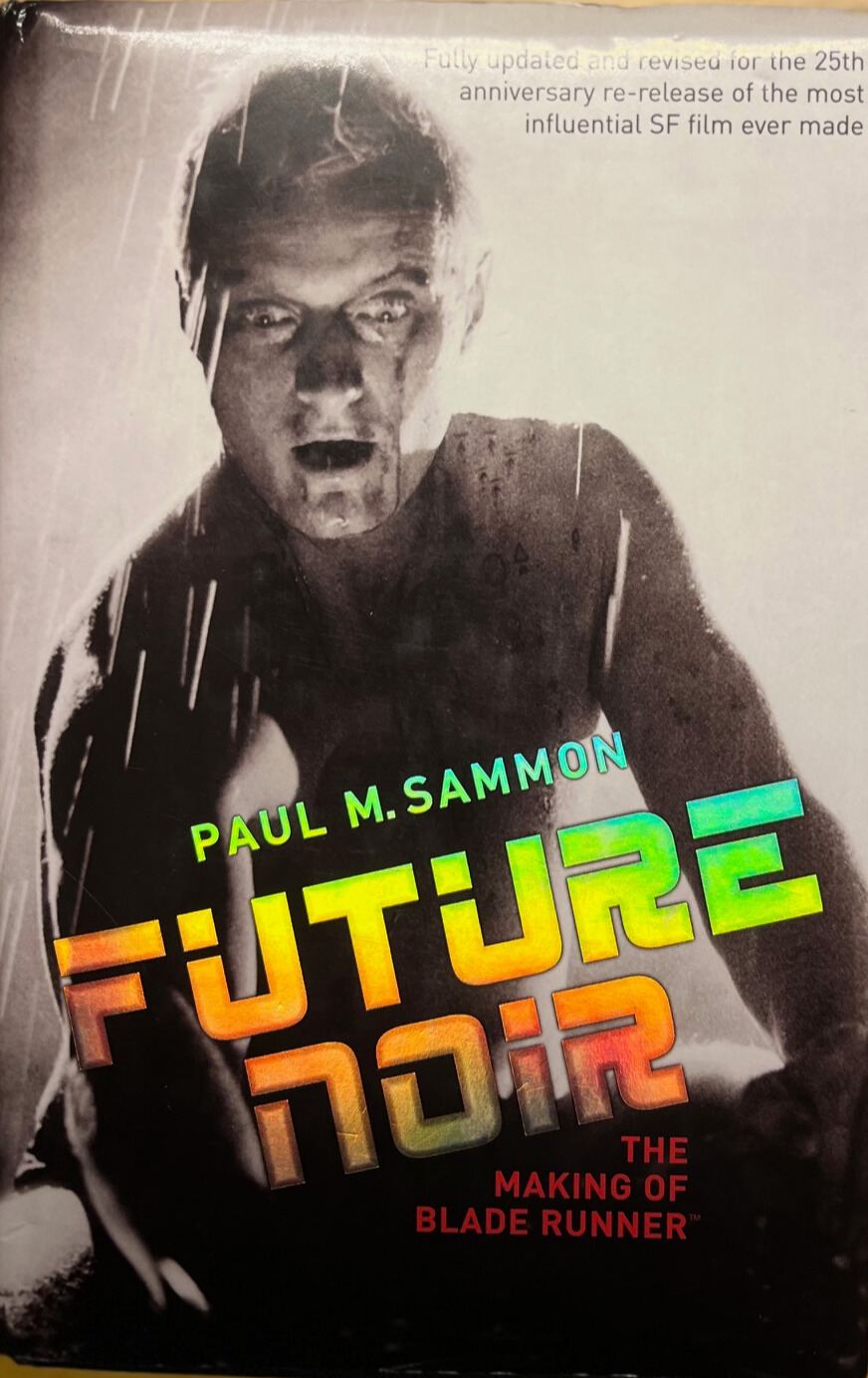
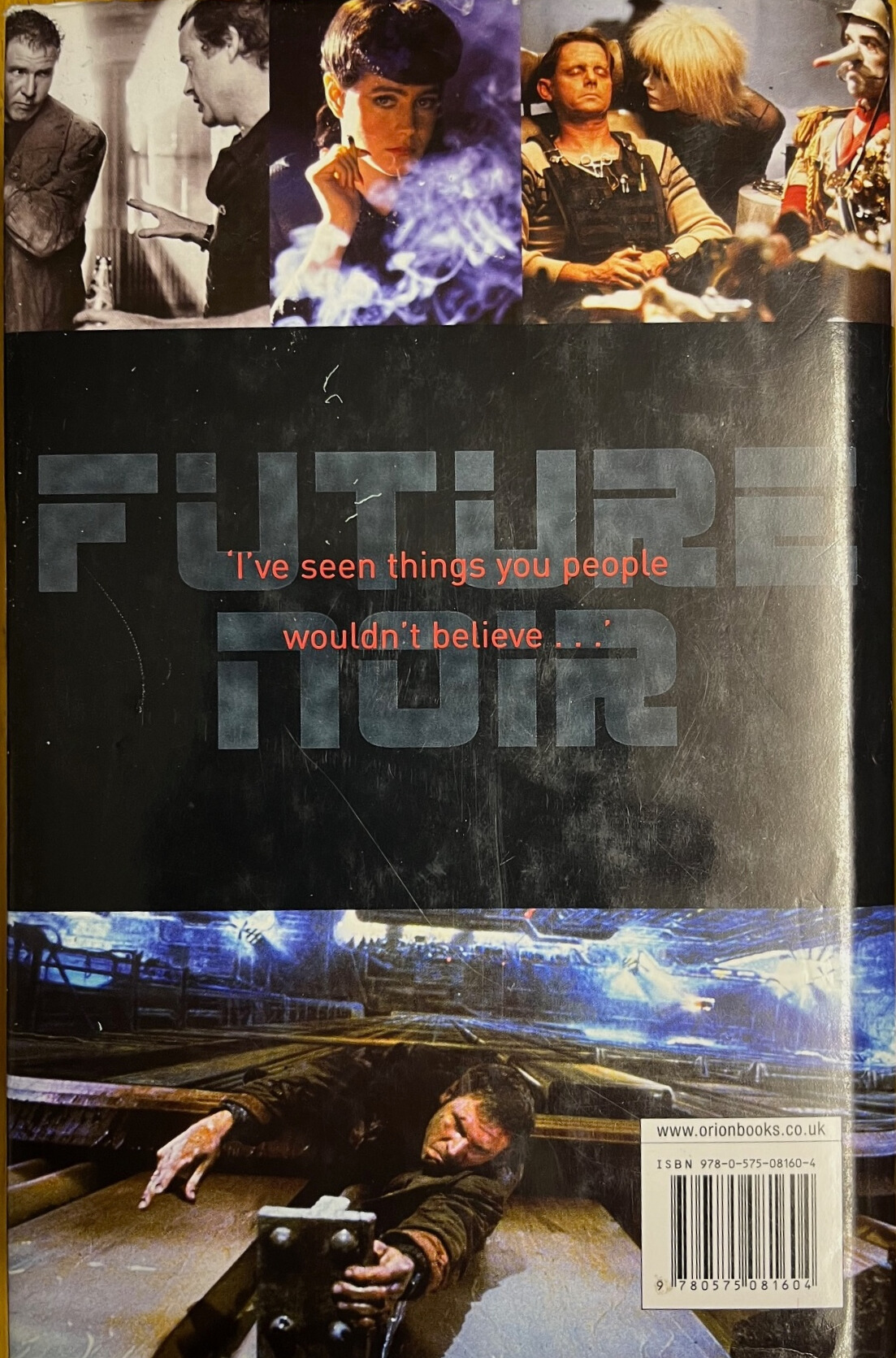
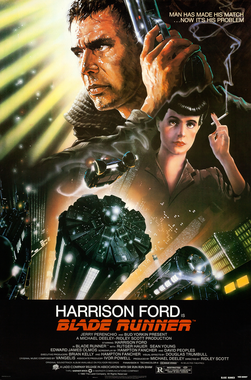
(l-r) Front cover showing Rutger Hauer as Roy Barry; back cover; film theatrical release poster by John Alvin
Unusually for books of this kind, the author – who is clearly an obsessive – has not only interviewed the director and the actors, but has also interviewed several hundred of the crew, paying particular and detailed attention to the creation of the special effects. This is where the book comes into its own. Such was Ridley’s Scott’s attention to detail, such was his determination to create the look of a believable future, that individual frames of the film are often a composite of up to fifty special effects. So, anyone interested in production design, costume, architectural design, special effects; anyone interested in the minutiae of how to direct; anyone interested in the different contributions of cinematographer, editor, producers and so forth, will find much to interest them in this book.
It has its faults: because there is so much information shoveled (the verb is appropriate) into the text, it is advisable to read a section at a time. Because many of the section categories overlap, the same information is often repeated four, five or six times.
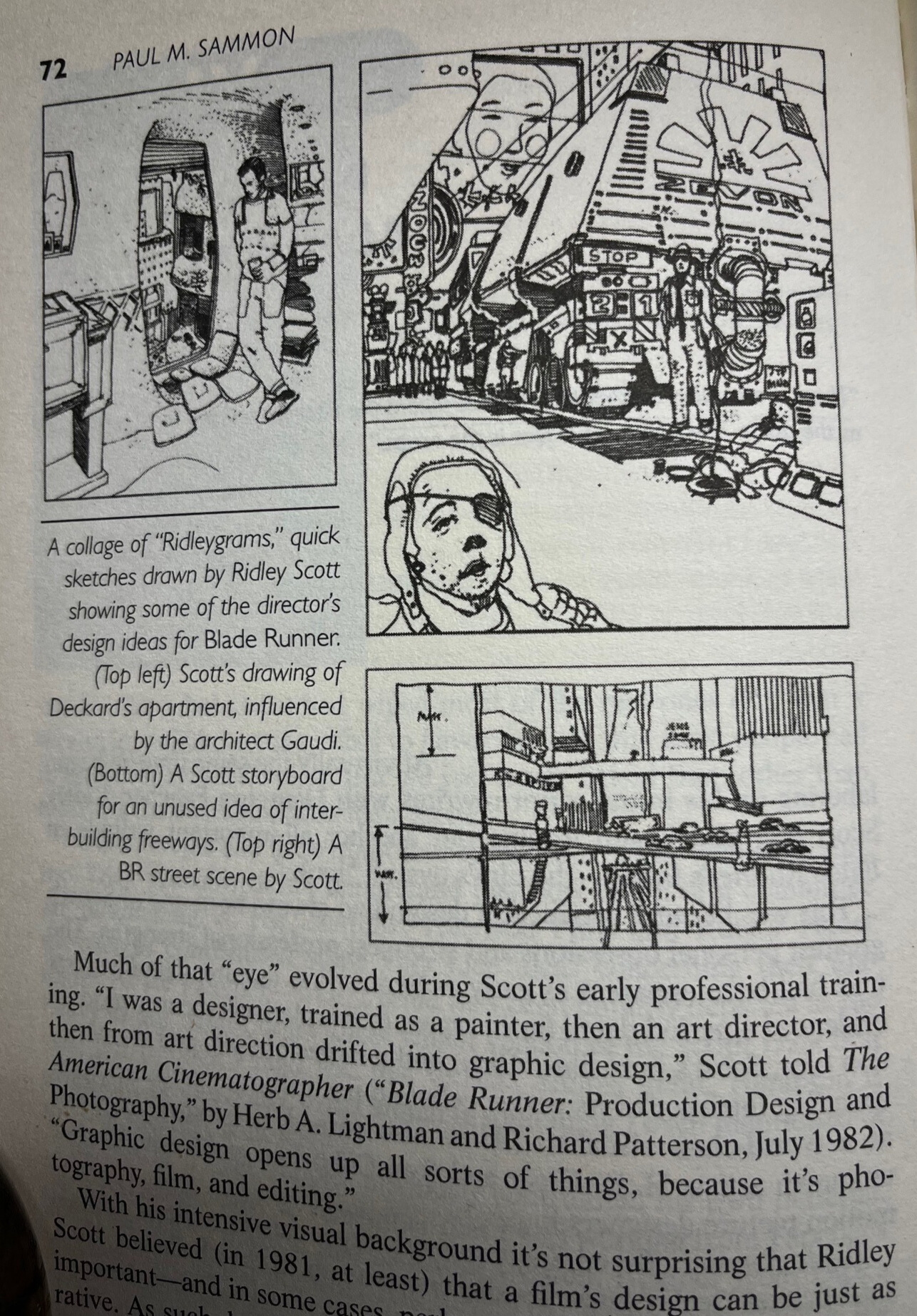
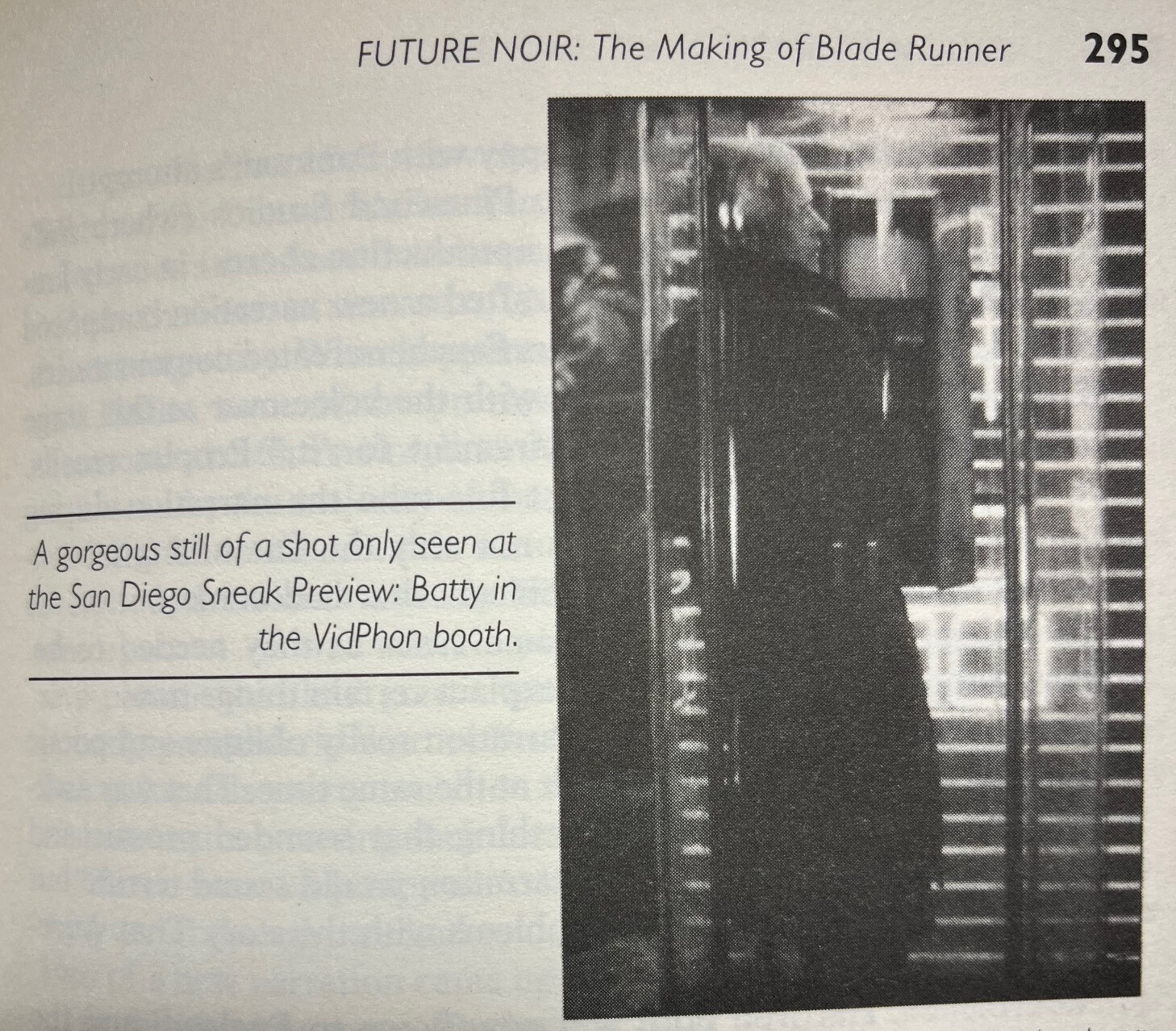

(l-r) Insert page showing production sketches; insert page showing still only seen in San Diego preview; Sean Young as Rachael. Photograph: Allstar/Warner Bros/Sportsphoto Ltd
But this is one of the few books, apart from manuals, which shows you how the various processes work. It is copiously illustrated: everything from Ridley Scott’s own storyboards to details of special effects shots. What the book demonstrates clearly is not only the collaborative nature of film-making, but also the single-mindedness and attention to detail that is essential for a remarkable director like Scott.
Brian McAvera, February 2026
A copy of ‘Future Noir’ is available in the NI Visual Art Research Library & Archive at the Golden Thread Gallery. NIVARLA items in the rare and special collection will be available to view by appointment. We will share more information on how to access and use NIVARLA soon!
The Northern Ireland Visual Art Research Library & Archive is supported by the Ampersand Foundation, with many books and archive items donated and on loan from the McAvera & Walker Library.
Golden Thread Gallery is supported by:


Help fund our work
Through a one-off or repeat donation, you’ll enable us to continue showcasing art and culture with our community.
Supported by